
Access Greenwich Property Records
Greenwich property records can be searched through local clerk systems, statewide portals, and in person records desks. This page is built for people who need deeds, land records, mortgages, liens, and map filings for Greenwich. Start with the official search links, then use filing rules and office notes to narrow the right index and date range. Connecticut records are local by design, so the town or city where land sits controls the official filing record. Use the search tool below to begin a fast Greenwich property records lookup workflow.
Greenwich Property Records Overview
Greenwich property records include deeds, land records, mortgages, liens, releases, and maps. People use Greenwich property records to confirm ownership, check filing dates, and track document history in Fairfield County. In Connecticut, land records are filed in the local clerk office where the land lies. That rule comes from CGS 47-10, which requires recording in the town where the property is located. Because each municipality keeps its own indexes, a search in Greenwich property records should start with the local clerk portal and then expand to state tools when needed.
Most Greenwich property records searches start online through local systems such as SearchIQS, US Land Records, New Vision, or RecordHub. These systems usually let you search names, book and page, instrument number, filing date, and property address. For Connecticut users, Secretary of the State tools cover UCC liens on personal property, while town clerk systems cover real property records. That split matters because a full title trail may require both systems. When Greenwich records are not complete online, the clerk counter and vault records still provide access to historical land records.
Greenwich reports records digitized from the 1920s through the present day. Greenwich accepts eRecordings and publishes submission windows for weekday processing.
Greenwich Property Records Links
The links below are primary starting points for greenwich property records, deed search, lien review, and filing instructions. Use local clerk pages first, then state portals for broader Connecticut records checks.
- fairfieldct.org/service/town_clerk/land_records.php
- www.fairfieldct.org/service/town_clerk/index.php
- www.greenwichct.gov/2252/Digital-Land-Records-Search
- www.greenwichct.gov/319/Town-Clerk
- portal.ct.gov/csl/departments/public-records/about
- portal.ct.gov/csl/departments/public-records
- portal.ct.gov/csl/departments/public-records/municipal-program/policies-forms
- business.ct.gov/
- business.ct.gov/knowledge-base/articles/uniform-commercial-code-forms-and-fees
- service.ct.gov/business/s/onlineenquiry?language=en_US
Note: Verify posting dates and recording cutoffs before filing or ordering greenwich property records copies.
Greenwich Local Clerk Notes
Greenwich reports records digitized from the 1920s through the present day.
Greenwich accepts eRecordings and publishes submission windows for weekday processing.
Greenwich offers a property alert system for recorded document monitoring.
Requesters who need certified copies should confirm recording windows, copy charges, and certification charges before visiting the office. Across Connecticut, the standard framework after July 1, 2025 is seventy dollars for first page filing on non nominee documents and five dollars for each added page. Nominee or MERS filings follow higher fixed fee rules under CGS 7-34a and CGS 49-10. Using accurate names, filing years, and known parcel details will improve Greenwich property records search results and reduce rework at the clerk desk.
Greenwich Property Records Rules
Greenwich property records work under Connecticut statutes that define what gets recorded and how records are maintained. CGS 47-10 requires conveyances to be recorded in the town where land is located. CGS 1-200(5) defines public records as recorded data connected to public business. Public Act 21-173 voids unlawful restrictive covenants and allows no fee renunciation filings. These rules shape deed, mortgage, lien, and map recording practice across Connecticut and guide what appears in searchable property records indexes.
Connecticut also ties recording fees and nominee filing rules to CGS 7-34a and CGS 49-10. Offices in greenwich apply those standards with local workflows, intake windows, and portal options. Form OP-236 and myCTREC filing are part of conveyance tax compliance for transfers. For foreclosure related document context, the Judicial Branch foreclosure page and mediation resources are relevant supporting sources. Using statute language and local clerk guidance together helps people pull the correct greenwich property records in one request cycle.
Greenwich Property Records Images
The Greenwich - Digital Land Records page is one source used for greenwich property records research and filing guidance.
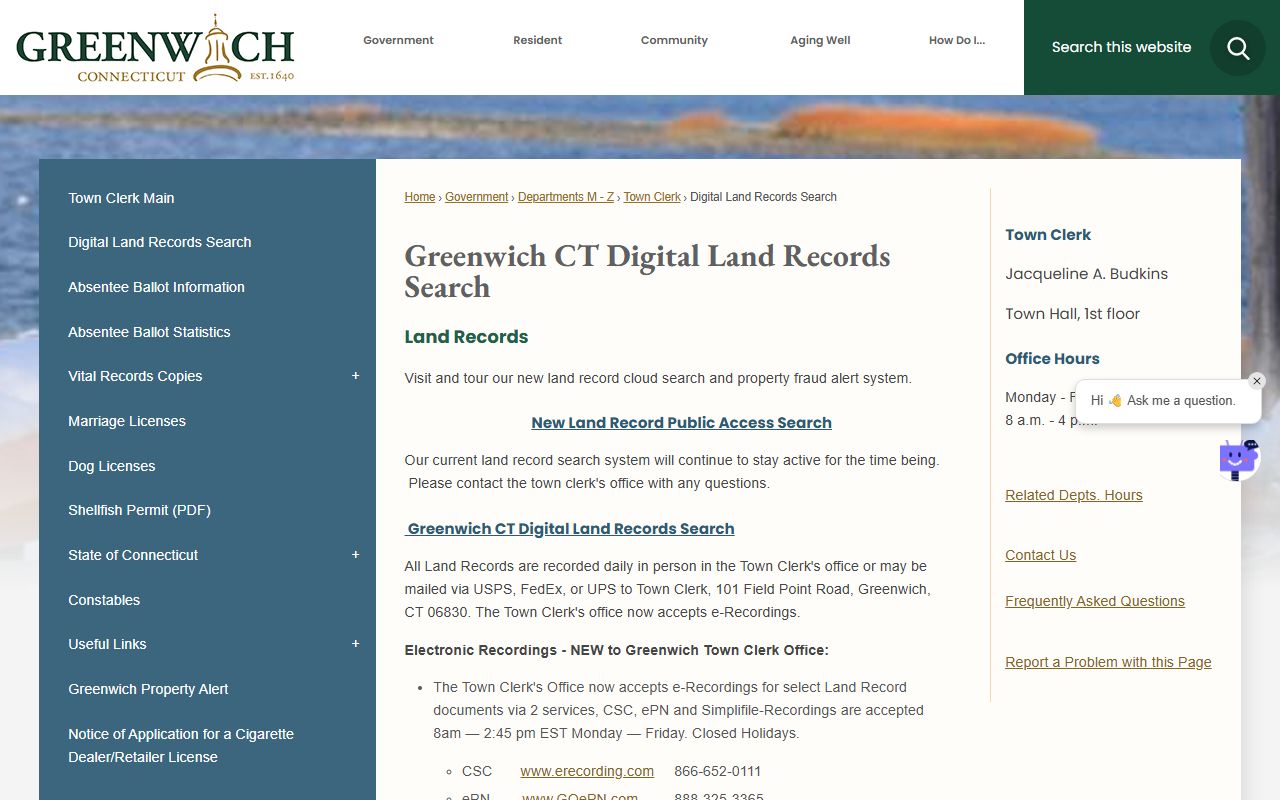
This image supports local steps for searching deeds, mortgages, liens, maps, and related greenwich property records.
The Greenwich Town Clerk page is one source used for greenwich property records research and filing guidance.
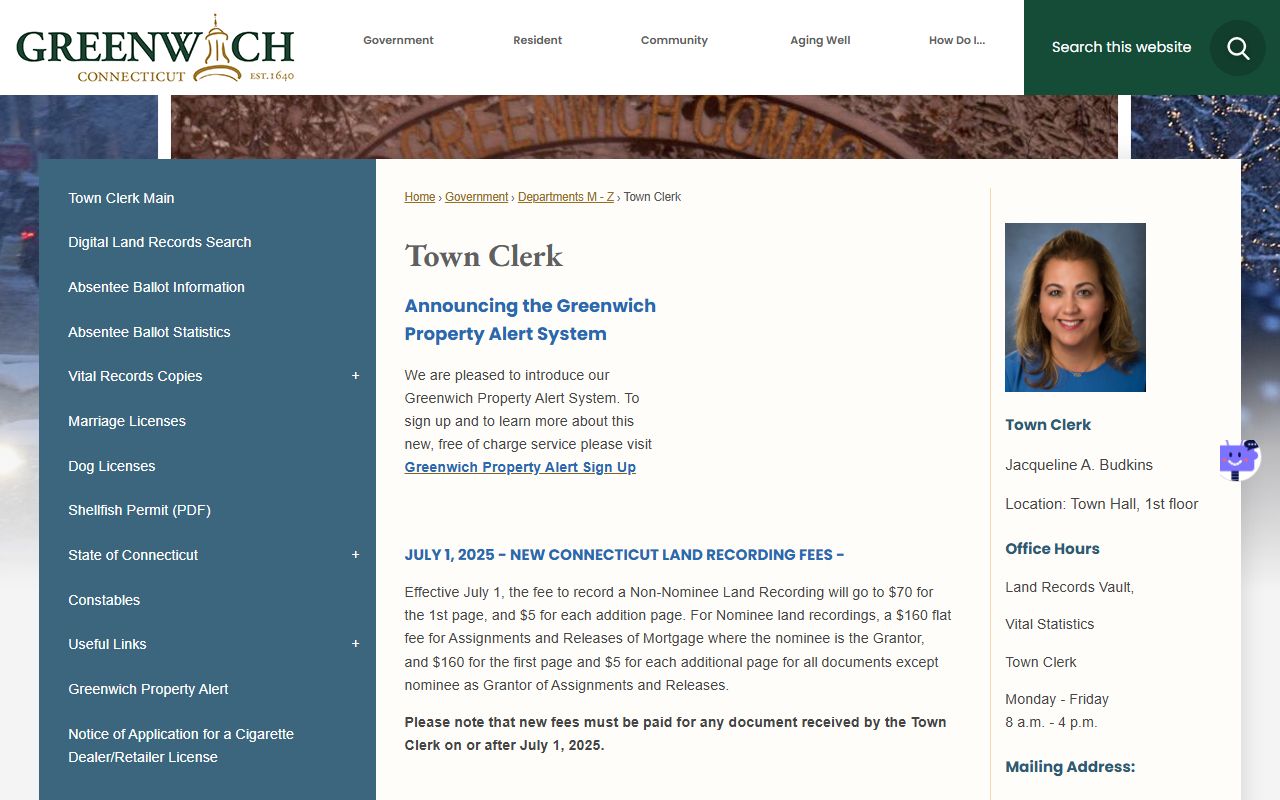
This image supports local steps for searching deeds, mortgages, liens, maps, and related greenwich property records.
Greenwich Property Record Types
Greenwich property records include many document classes. Searchers should match the document type to the office and portal to avoid missing filings. A focused record type search saves time and gives cleaner results for ownership review.
- Warranty deeds and quitclaim deeds
- Mortgages, assignments, and releases
- Municipal, tax, and judgment liens
- Subdivision maps and related map filings
- Foreclosure related recorded notices
Some towns provide free index search but charge for image printing or downloading. Historical image depth also varies by office. If online images are partial, ask the clerk for vault copies or certified copies from the town where the land sits.
Greenwich County Property Records
Greenwich sits in Fairfield County, but Connecticut land records are still filed in local town and city clerk offices. Use county context to identify nearby offices, then confirm the exact municipality for the parcel before filing or ordering records.